Music as a gateway to self connection
There are many gateways to self-connection. A reminder that music is one of the most accessible and how it can help….
Do you ever think about the music you listened to in your teens? Like mid-life, the teens are a time of transition. A period where you emerge from the immediacy of your family and begin discovering with new eyes that you are separate from your family of origin. My teen soundtrack was filled with gritty, soulful tracks about being misunderstood and struggling to fit in, from artists like Alanis Morisette, Jeff Buckley, and Nirvana. I scorned the boppy pop tunes, feeling more seen by the anger and frustration and longings of indie-grunge.
My reflex is to feel some embarrassment about my teen playlist cliche. I feel a similar flavour of embarrassment about some of the songs I listen to obsessively in mid-life. It’s obvious that this embarrassment is about revealing a vulnerable emotional palate that I’m still coming to terms with.
If any of this resonates, others have explored this phenomenon in practice and in research on music and its therapeutic effects.
One Australian musician, Archie Roach, has said before that each time he sang the heart wrenching song Took the Children Away, he let go of a little piece of his grief, and the load got lighter. Archie, was one of tens of thousands of Indigenous children forcibly removed from their families as part of a racist assimilation policy.
For me, Archie is gifting us the insight that the depth of pain may never be melted away in one go, or through using one medium like the spoken word. But through creating, sharing and repeating this truth in music - the truth of an experience at once personal but also collective - it’s as if the song becomes a safe container for truth telling. As he puts it, “music is the medicine. You start to realise that this song is not so much about what’s been lost as what’s been found. What you’ve discovered. What you’ve learnt.” The song expresses both the pain of disconnection; but then in meeting the pain with honesty, the relief of what the truth reveals. About what’s important; and precious. And true.
Music inspires in all sorts of unpredictable ways. Archie’s music paved the way for hip-hop artist Briggs who re-created his original song changing the lyrics to “the children came back”. The song references the unshakeable staunchness of a people who know they belong; naming many of the ‘children’, grown up now ,in sports, arts and civil rights, who have made their mark. This song moves me as much as the original. Maybe it’s the hope I hear, the grace; and the reminder of the power of connection and belonging. That it can’t ever truly be taken away. Music captures this paradox: the depth of pain of disconnection and that the pain does not get to ever be permanent. As Briggs says (giving me goosebumps and tears prickling in my eyes):
The children came back
I'm the dead hearts' heartbeat
The children came back
I'm the dead hearts' heartbeat
Back where their hearts grow strong
Back where they all belong
The children came back
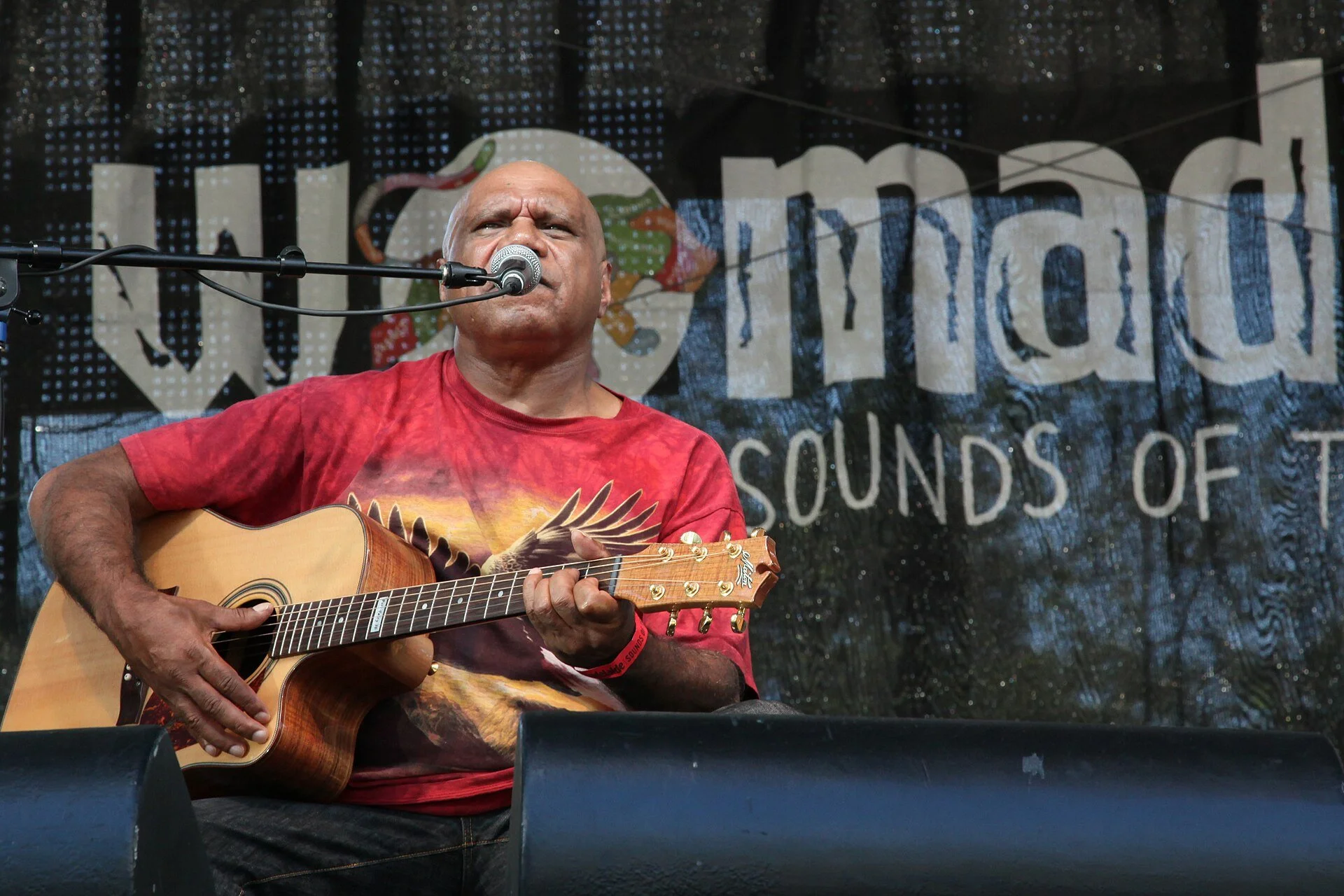
Archie Roach (1956-2022). Vale Archie. Thank you for the gift of your music and of your grace.
Photo: Nichollas Harrison
Mid-life hot tub cry dates
Obviously it’s not just creating and playing music that can feel good. We can participate in music through attuning to the felt sense of the music on our terms. After a successful career streak as a therapist, teacher and organizer, Prentis Hemphill experienced something akin to mid-life unraveling. In their book, they described a phase of burn out after an intense period working inside the Black Lives Matter movement. It’s not as if Prentis was unused to expressing their emotions or this was the first time they felt grief. It turned out though that there was simply a whole wave of emotions that were demanding their attention. When they could feel it building up in their system, they would take themselves off for regular “hot tub cry dates” alone listening to the ‘saddest playlist imaginable’.
What I love about this description is the autonomy and freedom. It’s not as if it’s the only way that Prentis processed what they were feeling. But there’s a sense of taking responsibility of one’s own feeling state. You don’t always need to put yourself in a really vulnerable place to process your feelings (e.g. being witnessed by others - although this is another really valuable gateway) and you don’t need to take yourself off on a long retreat (again, this might also be something you’d want to do as well). But crying with music is something you can do when you just have an hour to yourself. And you can tailor it to what speaks to you. A song that might bring one person to sad tears, brings hopeful joy for another.
How music helps us self-connect
My experience with listening to music is that is can be an emotional mirror. It can match or name deep feelings that I don’t have access to yet. Whether it’s the lyrics or the emotional tone of the song, it pulls me in. It gives me a clue as to what’s important before I become conscious of it. Researchers have found that the brain state associated with music listening is the DMN (the default mode network). I’ve previously written about how the DMN is important because it is the brain state when we are thinking about ourselves, what the future has in store for us, and how we relate to others. The DMN can be ‘hijacked’ by painful moments in the past, preventing you from connecting with yourself with warmth and self-understanding. But music can support a by-pass. It can give us access to what is important to us and provides a safe non intrusive way to explore what might be under the tears or the excitement.
Exercise: Music as a gateway for self-connection
Set up a space for yourself that feels safe, cosy or inspiring.
As you listen to whatever music is drawing you in, if or when you feel an emotion whether it’s awe, tenderness, or anger, sadness, let yourself bathe in it. If you’re feeling a bit lost on naming the feeling or body sensation, here is a list. Then, simply feel it. And if it feels good to, you could ponder the question:
If my tears/excited jumpy feeling/etc, could say something, what would it be?
What might be important about that? What’s even underneath that?
You can journal about it or you may enjoy talking about it with a friend. Or moving your body to express it.